
Have you ever experienced headaches after reading, blurred vision when using your phone, or difficulty concentrating on close-up tasks? These symptoms are often thought of as eye strain or fatigue, but they could indicate convergence insufficiency (CI), a common binocular vision disorder in which the eyes have difficulty working together while focusing on nearby objects.
Convergence Insufficiency affects both children and adults and can interfere with reading, studying, screen use, office work, and daily activities. The good news is that it is treatable with professional vision therapy and appropriate eye care.
In this blog, we’ll explore the most common everyday signs of Convergence Insufficiency and explain when it’s time to seek expert help.
What Is Convergence Insufficiency?
Convergence insufficiency is a condition in which the eyes do not turn inward properly when focusing on nearby objects. Instead of working as a team, the eyes may drift outward, making close-up sessions uncomfortable and causing various visual symptoms.
People with this condition often have healthy eyesight during a routine eye exam, making it easy to overlook. However, specialized binocular vision testing can identify the problem and guide effective treatment.
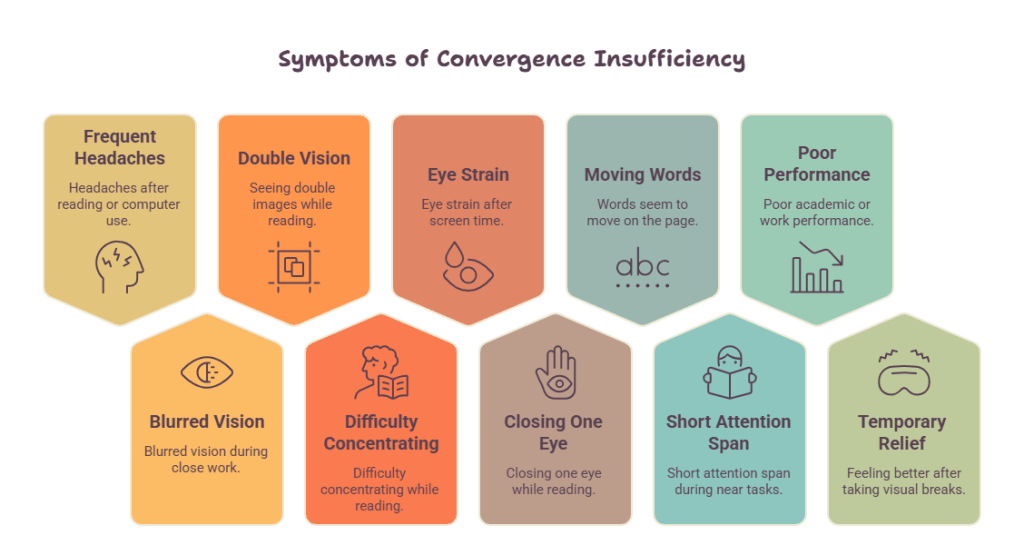
1. Frequent Headaches While Reading
Frequent headaches after reading, studying, or using a computer for long periods of time are one of the most common signs of convergence insufficiency. When the eyes have difficulty working together and focusing on nearby objects, the eye muscles become overworked, causing discomfort in the forehead, temples, and eyes.
If these headaches occur regularly during close-up tasks, it’s important to have your binocular vision evaluated by a vision therapy specialist to identify the underlying cause.
2. Blurred Vision During Close Work
Blurred vision while reading, writing, or using a smartphone may indicate that your eyes are having difficulty maintaining proper focus. In people with Convergence Insufficiency, the eyes cannot coordinate effectively during near tasks, making text appear blurry or out of focus.
These symptoms often worsen after extended periods of reading or screen use and may interfere with work, studies, and everyday activities if left untreated.
3. Double Vision
Seeing double images while reading or other nearby activities is also a warning sign of convergence insufficiency. This occurs when the eyes are not aligned properly, causing the brain to receive two separate images instead of one clear image.
Double vision can make reading uncomfortable, reduce concentration, and increase eye fatigue. Early diagnosis and vision therapy can help improve eye coordination and restore comfortable binocular vision.
4. Difficulty Concentrating While Reading
If you often lose your place while reading, skip lines, or have to reread the same paragraph, a lack of concentration may be the culprit. Poor eye coordination makes it difficult to follow words smoothly, leading to decreased reading speed and comprehension.
Children may have problems at school and adults may experience a decrease in productivity. A comprehensive binocular vision evaluation can determine if vision therapy is needed.
5. Eye Strain After Screen Time
Extended use of computers, tablets, and smartphones places significant stress on your visual system. If your eyes feel tired, sore, watery, or uncomfortable after screen time, it could be more than digital eye strain.
Convergence Insufficiency often makes it harder for the eyes to maintain focus during prolonged near work, resulting in visual fatigue. Professional vision therapy can strengthen eye coordination and improve visual comfort.
6. Closing One Eye While Reading
Some people naturally close or cover one eye while reading because it temporarily reduces double vision and blurring. Although it may seem harmless, it often indicates that both eyes are not working effectively.
Using one eye all the time can affect your reading quality and visual comfort. An eye exam that focuses on binocular vision can identify problems and recommend appropriate treatment.
7. Words Seem to Move on the Page
If words appear to jump, float, or move while reading, your eyes may be struggling to maintain proper alignment. This symptom is common in individuals with Convergence Insufficiency and can make reading slow, frustrating, and mentally exhausting.
Children may avoid reading altogether because of this discomfort. Early diagnosis and personalized vision therapy can improve eye teaming skills and make reading much more comfortable.
8. Short Attention Span During Near Tasks
Children and adults with convergence defects often lose concentration when reading or working close together because their eyes tire quickly. What appears to be a lack of attention or interest may be the result of an undiagnosed binocular vision problem.
As visual discomfort increases, concentration decreases. Identifying the condition early can improve reading ability, attention, and overall academic or workplace performance.
9. Poor Academic or Work Performance
Convergence Insufficiency can negatively affect both academic success and workplace productivity. Difficulty reading, frequent eye strain, headaches, and poor concentration may slow learning and reduce efficiency during office work.
Many students struggle with homework, while professionals find it difficult to work on computers for long hours. Proper diagnosis and customized vision therapy can significantly improve visual performance, confidence, and daily productivity.
10. Feeling Better After Taking Visual Breaks
Do your symptoms improve after closing your eyes or looking away from a screen for a few minutes, only to return when you start reading again? This temporary relief is a common sign of Convergence Insufficiency.
Visual breaks reduce strain on the eye muscles, but do not solve the underlying problem. Vision therapy strengthens eye coordination and provides long-term relief from recurrent visual discomfort.
What Causes Convergence Insufficiency?
Several factors can contribute to Convergence Insufficiency, including:
- Weak eye muscle coordination
- Binocular vision disorders
- Excessive screen time
- Traumatic brain injury
- Neurological conditions
- Developmental vision problems
- Eye muscle imbalance
- Prolonged reading or computer work
How Is Convergence Insufficiency Diagnosed?
Convergence Insufficiency is diagnosed through a comprehensive binocular vision assessment rather than a routine eye examination.
During the evaluation, an eye care professional carefully examines eye teaming ability, Near Point of Convergence (NPC), eye movement control, focusing ability, binocular vision performance, eye alignment, and accommodation function.
These specialized tests measure how well your eyes work together during close activities like reading or using a screen, help identify the root cause of your symptoms, and create a personalized vision treatment plan.
Treatment for Convergence Insufficiency
The most effective treatment is vision therapy, an individualized program designed to improve eye coordination and strengthen binocular vision.
Treatment options may include:
- Customized Vision Therapy sessions
- Home-based eye exercises
- Prism lenses (when appropriate)
- Computer-based visual training
- Regular progress evaluations
- Personalized treatment plans
Many patients notice significant improvement in reading comfort, concentration, and overall visual performance after completing a structured vision therapy program.
When Should You Visit Dr. Abhinav Maharwal for Vision Therapy?
If you or your child frequently experiences headaches while reading, blurred or double vision, eye strain after screen use, poor reading performance, or difficulty concentrating on close tasks, it’s time to see a vision therapy specialist. Early diagnosis can prevent long-term learning and performance problems.
At Dr. Abhinav Maharwal’s “Sight First Vision Therapy Clinics in Delhi and Jaipur” we offer comprehensive binocular vision assessments and personalized vision therapy programs designed to improve eye coordination, reduce symptoms, and help patients achieve comfortable, clear, and efficient vision for everyday activities.
Conclusion
Convergence insufficiency is more common than you think, but it often goes undiagnosed because the symptoms are similar to common eye strain. Recognizing these 10 everyday warning signs can help you get immediate help and avoid unnecessary problems with reading, learning, working, and using screens.
If you or your child experience persistent visual discomfort during near tasks, a comprehensive binocular vision assessment can provide answers. Early diagnosis and personalized vision therapy can significantly improve comfort, focus, and quality of life.
If you’re looking for expert Convergence Insufficiency treatment and Vision Therapy in India, book a comprehensive eye evaluation with Dr. Abhinav Maharwal and take the first step toward comfortable, coordinated vision.
FAQ’s
1. What is Convergence Insufficiency?
Convergence Insufficiency is a binocular vision disorder in which the eyes have difficulty working together while focusing on nearby objects. It can cause symptoms such as eye strain, headaches, blurred vision, and difficulty reading.
2. What are the common symptoms of Convergence Insufficiency?
Common symptoms include headaches while reading, blurred or double vision, eye strain, difficulty concentrating on close work, words appearing to move on the page, and poor reading performance.
3. Can Convergence Insufficiency affect children?
Yes. Children with Convergence Insufficiency may struggle with reading, homework, concentration, and classroom learning. The condition is often mistaken for attention or learning difficulties if not properly diagnosed.
4. Can adults develop Convergence Insufficiency?
Yes. Adults can experience Convergence Insufficiency, especially those who spend long hours reading, working on computers, or using digital devices. Symptoms often include eye fatigue, headaches, and reduced productivity.
5. How is Convergence Insufficiency diagnosed?
A comprehensive binocular vision assessment is used to diagnose Convergence Insufficiency. The examination evaluates eye alignment, eye teaming, focusing ability, eye movements, and Near Point of Convergence (NPC).
6. What is the best treatment for Convergence Insufficiency?
Vision Therapy is considered one of the most effective treatments for Convergence Insufficiency. It helps improve eye coordination, focusing ability, and binocular vision through customized exercises and professional guidance.
7. Can Convergence Insufficiency be cured?
In many cases, the symptoms can be significantly improved or resolved with a structured Vision Therapy program. Early diagnosis and consistent treatment usually provide the best outcomes.
8. Is Convergence Insufficiency related to excessive screen time?
Screen time does not directly cause Convergence Insufficiency, but prolonged use of digital devices can worsen symptoms such as eye strain, blurred vision, and headaches in people who already have the condition.
9. When should I visit a Vision Therapy specialist?
You should consult a Vision Therapy specialist if you frequently experience headaches while reading, double vision, blurred vision, eye strain, difficulty concentrating, or persistent discomfort during close-up tasks.
10. Why should I choose Dr. Abhinav Maharwal for Convergence Insufficiency treatment?
Dr. Abhinav Maharwal provides comprehensive binocular vision assessments and personalized Vision Therapy programs for children and adults. The clinic focuses on improving eye coordination, reducing visual discomfort, and helping patients achieve comfortable, efficient vision for everyday activities.