kirti edigital

10 Everyday Signs of Convergence Insufficiency You Shouldn't Ignore

10 Everyday Signs of Convergence Insufficiency You Shouldn’t Ignore

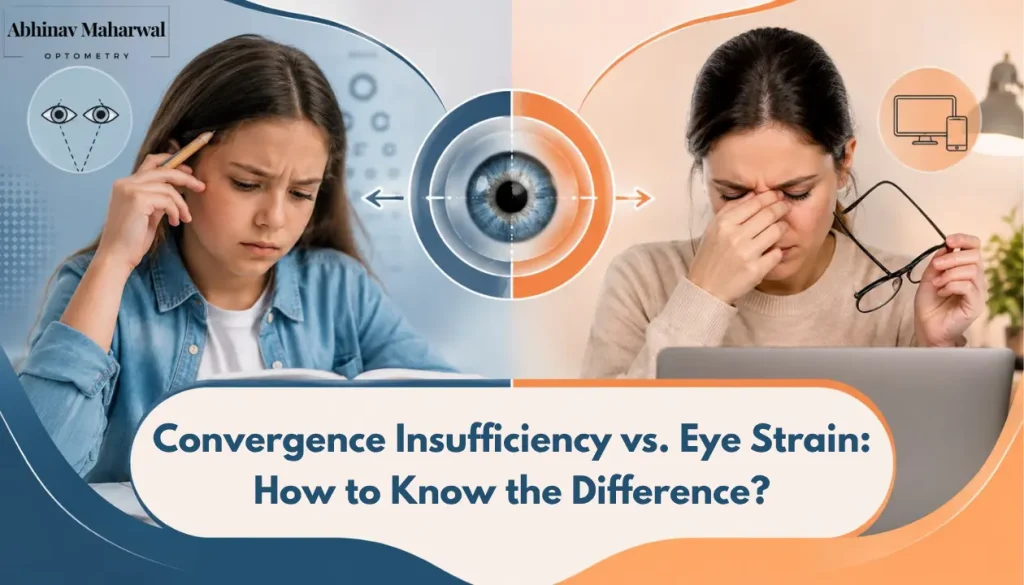
Have you ever experienced headaches after reading, blurred vision when using your phone, or difficulty concentrating on close-up tasks? These symptoms are often thought of as eye strain or fatigue, but they could indicate convergence insufficiency (CI), a common binocular vision disorder in which the eyes have difficulty working together while focusing on nearby objects. Convergence Insufficiency affects both children and adults and can interfere with reading, studying, screen use, office work, and daily activities. The good news is that it is treatable with professional vision therapy and appropriate eye care.  In this blog, we’ll explore the most common everyday signs of Convergence Insufficiency and explain when it’s time to seek expert help. What Is Convergence Insufficiency? Convergence insufficiency is a condition in which the eyes do not turn inward properly when focusing on nearby objects. Instead of working as a team, the eyes may drift outward, making close-up sessions uncomfortable and causing various visual symptoms. People with this condition often have healthy eyesight during a routine eye exam, making it easy to overlook. However, specialized binocular vision testing can identify the problem and guide effective treatment. 1. Frequent Headaches While Reading Frequent headaches after reading, studying, or using a computer for long periods of time are one of the most common signs of convergence insufficiency. When the eyes have difficulty working together and focusing on nearby objects, the eye muscles become overworked, causing discomfort in the forehead, temples, and eyes. If these headaches occur regularly during close-up tasks, it’s important to have your binocular vision evaluated by a vision therapy specialist to identify the underlying cause. 2. Blurred Vision During Close Work Blurred vision while reading, writing, or using a smartphone may indicate that your eyes are having difficulty maintaining proper focus. In people with Convergence Insufficiency, the eyes cannot coordinate effectively during near tasks, making text appear blurry or out of focus.  These symptoms often worsen after extended periods of reading or screen use and may interfere with work, studies, and everyday activities if left untreated. 3. Double Vision Seeing double images while reading or other nearby activities is also a warning sign of convergence insufficiency. This occurs when the eyes are not aligned properly, causing the brain to receive two separate images instead of one clear image. Double vision can make reading uncomfortable, reduce concentration, and increase eye fatigue. Early diagnosis and vision therapy can help improve eye coordination and restore comfortable binocular vision. 4. Difficulty Concentrating While Reading If you often lose your place while reading, skip lines, or have to reread the same paragraph, a lack of concentration may be the culprit. Poor eye coordination makes it difficult to follow words smoothly, leading to decreased reading speed and comprehension.  Children may have problems at school and adults may experience a decrease in productivity. A comprehensive binocular vision evaluation can determine if vision therapy is needed. 5. Eye Strain After Screen Time Extended use of computers, tablets, and smartphones places significant stress on your visual system. If your eyes feel tired, sore, watery, or uncomfortable after screen time, it could be more than digital eye strain.  Convergence Insufficiency often makes it harder for the eyes to maintain focus during prolonged near work, resulting in visual fatigue. Professional vision therapy can strengthen eye coordination and improve visual comfort. 6. Closing One Eye While Reading Some people naturally close or cover one eye while reading because it temporarily reduces double vision and blurring. Although it may seem harmless, it often indicates that both eyes are not working effectively.  Using one eye all the time can affect your reading quality and visual comfort. An eye exam that focuses on binocular vision can identify problems and recommend appropriate treatment. 7. Words Seem to Move on the Page If words appear to jump, float, or move while reading, your eyes may be struggling to maintain proper alignment. This symptom is common in individuals with Convergence Insufficiency and can make reading slow, frustrating, and mentally exhausting. Children may avoid reading altogether because of this discomfort. Early diagnosis and personalized vision therapy can improve eye teaming skills and make reading much more comfortable. 8. Short Attention Span During Near Tasks Children and adults with convergence defects often lose concentration when reading or working close together because their eyes tire quickly. What appears to be a lack of attention or interest may be the result of an undiagnosed binocular vision problem. As visual discomfort increases, concentration decreases. Identifying the condition early can improve reading ability, attention, and overall academic or workplace performance. 9. Poor Academic or Work Performance Convergence Insufficiency can negatively affect both academic success and workplace productivity. Difficulty reading, frequent eye strain, headaches, and poor concentration may slow learning and reduce efficiency during office work. Many students struggle with homework, while professionals find it difficult to work on computers for long hours. Proper diagnosis and customized vision therapy can significantly improve visual performance, confidence, and daily productivity. 10. Feeling Better After Taking Visual Breaks Do your symptoms improve after closing your eyes or looking away from a screen for a few minutes, only to return when you start reading again? This temporary relief is a common sign of Convergence Insufficiency.  Visual breaks reduce strain on the eye muscles, but do not solve the underlying problem. Vision therapy strengthens eye coordination and provides long-term relief from recurrent visual discomfort. What Causes Convergence Insufficiency? Several factors can contribute to Convergence Insufficiency, including: How Is Convergence Insufficiency Diagnosed? Convergence Insufficiency is diagnosed through a comprehensive binocular vision assessment rather than a routine eye examination.  During the evaluation, an eye care professional carefully examines eye teaming ability, Near Point of Convergence (NPC), eye movement control, focusing ability, binocular vision performance, eye alignment, and accommodation function.  These specialized tests measure how well your eyes work together during close activities like reading or using a screen, help identify the root cause of your symptoms, and create a personalized vision treatment plan. Treatment for Convergence Insufficiency The most

10 Everyday Signs of Convergence Insufficiency You Shouldn’t Ignore Read More »

What Is Amblyopia (Lazy Eye)? Symptoms, Causes & Treatment

What Is Amblyopia (Lazy Eye)? Symptoms, Causes & Treatment

Amblyopia, or lazy eye, causes reduced vision in one eye. Early diagnosis and vision therapy can significantly improve eyesight. Amblyopia, commonly known as lazy eye, is a developmental vision disorder in which one eye does not reach normal vision even with glasses or contact lenses. It usually develops in infancy or early childhood, when the brain causes one eye to take precedence over the other. Over time, a weakened eye can become less effective because the brain ignores the visual signals coming from it. Early diagnosis and treatment are important because untreated amblyopia can affect learning, depth perception, academic performance, sports activities, and overall quality of life.  At Abhinav Maharwal Vision Therapy Center, advanced vision therapy programs help children and adults improve visual skills and strengthen the connection between the eyes and the brain. What Is Amblyopia (Lazy Eye)? Amblyopia is a condition where the brain and one eye do not work together properly, causing reduced vision in the affected eye. Unlike common eyesight problems, amblyopia is not caused by an eye disease but by abnormal visual development during childhood. The disease usually affects one eye, but in rare cases it can affect both eyes. If detected early, treatment of amblyopia can significantly improve visual ability and binocular vision.  Modern treatment options such as vision therapy, corrective lenses, and vision training can help strengthen weakened eyes and improve hand-eye coordination. Symptoms of Amblyopia Recognizing the symptoms of amblyopia at an early stage can help prevent long-term vision problems. Some common signs include: 1. Blurred Vision in One Eye One of the most common symptoms of amblyopia is blurry or reduced vision in one eye. The affected eye may not develop normal visual acuity, even with glasses or contact lenses.  Children often do not realize they have this problem because the stronger eye compensates for the weaker one. 2. Poor Depth Perception Amblyopia can affect your ability to judge distance and accurately perceive depth.  This can make everyday activities such as catching a ball, climbing stairs, driving a car, and spilling liquids difficult. Decreased depth perception occurs because the eyes are not working together effectively. 3. Eye Misalignment Children with amblyopia may have one eye that turns inward, outward, upward, or downward.  This condition, known as strabismus or squint, prevents proper eye coordination and can lead the brain to ignore visual information from the weaker eye over time. 4. Frequent Eye Closing or Squinting People with amblyopia often squint, close one eye, or tilt their head to see objects more clearly.  This behavior is often an attempt to compensate for decreased vision in the affected eye and can be an early sign of vision problems. 5. Difficulty in Reading and Learning Reduced eye coordination and poor visual processing can make reading and learning more challenging. Children may feel disoriented while reading, have difficulty concentrating on homework, or experience eye strain. If left untreated, these problems can negatively impact academic performance and self-confidence.  Causes of Amblyopia Several factors can interfere with normal visual development and lead to amblyopia. The following table highlights the most common causes: Cause Description Strabismic Amblyopia Occurs when eye misalignment causes the brain to ignore input from one eye. Refractive Amblyopia Develops when there is a significant difference in prescription between the two eyes. Deprivation Amblyopia Caused by conditions such as cataracts that block visual development during childhood. Ptosis A drooping eyelid may obstruct vision and affect visual development. Family History Children with a family history of amblyopia or eye disorders may have a higher risk. Treatment for Amblyopia (Lazy Eye) Early amblyopia treatment offers the best chance of improving vision. Modern treatment approaches focus on strengthening the weaker eye and improving eye-brain communication. 1. Vision Therapy Vision Therapy is one of the most effective treatments for amblyopia. It includes customized exercises designed to improve eye coordination, focusing skills, tracking ability, and binocular vision. 2. Corrective Glasses or Contact Lenses Prescription glasses or contact lenses can help correct refractive errors and provide clear vision in both eyes. 3. Eye Patching Patching the stronger eye encourages the weaker eye to work harder, helping improve visual development and visual acuity. 4. Digital Vision Training Computer-based visual exercises can strengthen visual processing skills and make therapy more engaging for children. 5. Specialized Prism and Lens Therapy Prisms and therapeutic lenses can be used to improve eye alignment, depth perception, and binocular vision. Why Amblyopia Treatment Is Important Amblyopia (Lazy Eye) can affect vision, depth perception, reading ability, concentration, and daily activities if left untreated. Early diagnosis is beneficial, but treatment is not limited to children. With modern Vision Therapy, significant improvements can be achieved in both children and adults.  At Abhinav Maharwal Vision Therapy Clinic Jaipur, we specialize in personalized Amblyopia Treatment programs and have successfully treated patients up to 50 years of age and beyond.  With the right therapy and consistent training, many individuals can improve visual performance, eye coordination, and binocular vision regardless of age. Conclusion Amblyopia (“amblyopia”) is a common vision problem in children that, if left untreated, can affect visual development, learning, and daily life. Knowing the symptoms of amblyopia, its causes, and available treatments is essential to protecting your long-term eye health. With early diagnosis and advanced treatments such as Vision Therapy, many patients can achieve significant improvements in visual function and quality of life. Book Your Amblyopia Consultation Today If your child experiences blurred vision, eye misalignment, poor depth perception, or reading difficulties, professional evaluation is important. Visit Abhinav Maharwal Vision Therapy Center to schedule a comprehensive eye examination and learn more about personalized Amblyopia Lazy Eye Treatment, Vision Therapy, Squint EyeTreatment, and  Binocular Vision Therapy programs designed to improve visual performance and eye-brain coordination. Reference: https://www.mayoclinic.org/diseases-conditions/lazy-eye/symptoms-causes/syc-20352391 https://my.clevelandclinic.org/health/diseases/10707-amblyopia-lazy-eye FAQ’s

What Is Amblyopia (Lazy Eye)? Symptoms, Causes & Treatment Read More »

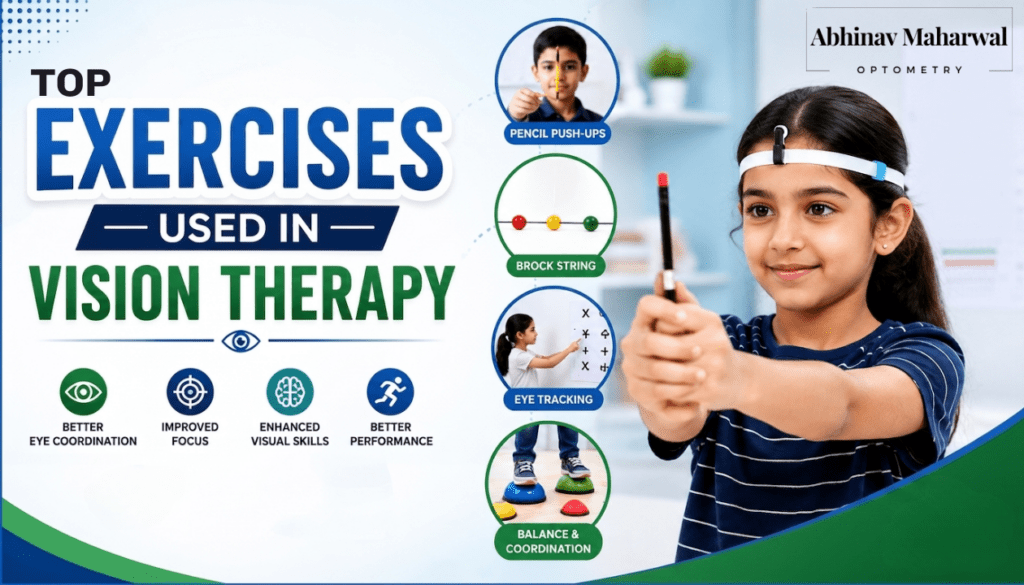
Top Exercises Used in Vision Therapy

Top Exercises Used in Vision Therapy

Vision plays an important role in learning, reading, concentration, sports, and everyday activities. However, many people experience visual difficulties even when their eyesight appears normal. Problems such as eye strain, headaches, poor focus, reading difficulties, lazy eye, and double vision often occur because the eyes and brain are not working together efficiently.  This is where vision therapy can be very helpful. Vision therapy uses structured exercises and one-on-one coaching to strengthen visual skills and improve overall eye coordination.  At Abhinav Mahawal Vision Therapy Clinic, individual therapy programs are designed to help children and adults improve their vision and long-term visual comfort. What Are Vision Therapy Exercises? Vision Therapy exercises are specialized visual activities designed to improve coordination between the eyes and the brain. These exercises help strengthen important visual skills such as eye tracking, focusing, depth perception, visual processing, and hand-eye coordination.  Similar to physical therapy for the body, vision therapy exercises train the visual system to function more efficiently. They are commonly recommended for lazy eyes, strabismus, convergence insufficiency, reading difficulties, digital eye strain, and learning-related vision problems. Top Exercises Used in Vision Therapy Pencil Push-Up Exercise Pencil push-ups are one of the most commonly used vision therapy exercises to improve eye interaction and vergence skills. In this activity, a patient focuses on a pencil while gradually moving it toward the nose. The exercise trains both eyes to work together comfortably and reduces symptoms such as double vision, headaches, and focusing problems. Brock String Exercise The Brock String exercise uses a string with colored beads placed at different distances. Patients focus on each bead while maintaining proper eye alignment.  This exercise is very effective in improving binocular vision, depth perception, and eye coordination. It is often used to treat vision problems associated with convergence insufficiency and strabismus. Eye Tracking Exercises Eye tracking exercises help improve smooth and accurate eye movements. Patients follow moving objects or visual targets using controlled eye movements.  These exercises support reading ability, visual attention, and concentration while reducing symptoms such as skipping lines or losing place during reading. Focus Change Exercises Focus change activities train the eyes to quickly adjust between near and distant objects. This exercise strengthens focusing flexibility and reduces eye fatigue caused by prolonged reading or screen use.  It is particularly beneficial for students and office workers experiencing visual strain. Saccadic Eye Movement Training Saccadic exercises improve rapid eye movements required for reading and scanning. Patients practice shifting focus between different visual targets accurately and efficiently.  Improved saccadic movement supports faster reading, better visual attention, and improved learning performance. Peripheral Vision Training Peripheral vision exercises extend visual awareness beyond central vision. These activities help patients become more aware of objects and movement in their environment.  Improving peripheral vision is especially beneficial for athletes, drivers, and people involved in sports. Balance and Visual Coordination Exercises Vision and body balance are closely connected. These exercises combine movement with visual tasks to strengthen coordination between the eyes and body.  Improved balance and visual coordination help enhance posture, physical control, and daily functional activities. Prism and Lens Activities Special prisms and therapeutic lenses are often used during vision therapy sessions to improve visual coordination and concentration. These activities help train the brain to process visual information more efficiently and improve binocular vision performance. Computer-Based Vision Therapy Modern Vision Therapy frequently includes computer-based programs designed to improve tracking, focusing, reaction time, and visual processing skills.  These interactive exercises make therapy engaging and help monitor progress effectively. Sports Vision Training Sports Vision Therapy focuses on improving reaction speed, depth perception, peripheral awareness, and hand-eye coordination.  Athletes benefit from improved vision, faster reactions, and improved concentration during competitive activities. Benefits of Vision Therapy Exercises Vision therapy exercises do more than just improve your vision. These help strengthen the entire visual system and improve visual comfort and performance.  Many patients report improved concentration, reading comprehension, eye coordination, and self-confidence after treatment. Major benefits include: Who Needs Vision Therapy Exercises? Vision therapy exercises are beneficial for both children and adults with vision problems. Children who are lazy, cross eyed, have reading difficulties, have trouble concentrating, or have learning-related vision problems often benefit greatly from treatment. Many parents report improved academic performance and increased self-confidence after treatment. Adults suffering from digital eye strain, headaches, focusing problems, double vision, or work-related visual fatigue can also benefit. Athletes additionally use Sports Vision Training to improve reaction time, coordination, and visual awareness. At Abhinav Maharwal Vision Therapy Clinic Jaipur, therapy programs are carefully customized according to each patient’s visual condition and treatment goals. Conclusion Vision therapy exercises play an important role in strengthening the eye-brain connection. These exercises are designed to improve visual skills essential for reading, learning, concentration, sports performance, and daily activities. With proper guidance and professional supervision, Vision Therapy can create long-term improvements in visual comfort and overall quality of life. Book Your Vision Therapy Consultation If you or your child experience headaches, poor focus, reading difficulties, lazy eye, squint, or visual discomfort, professional Vision Therapy may help. Visit Abhinav Maharwal Vision Therapy Center to schedule a comprehensive vision assessment and learn more about personalized treatment programs. FAQ‘s

Top Exercises Used in Vision Therapy Read More »

Scroll to Top