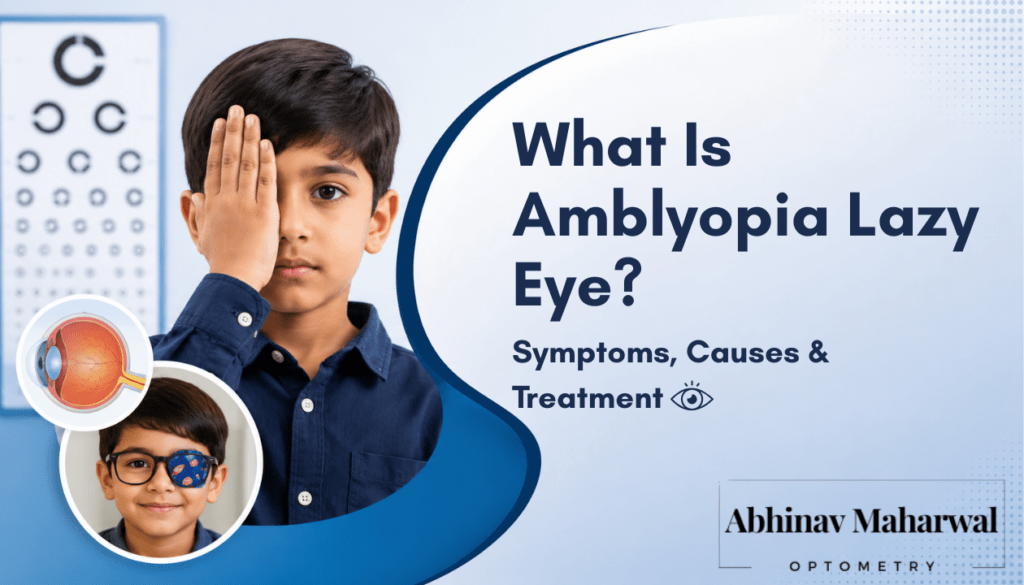
What Is Amblyopia (Lazy Eye)? Symptoms, Causes & Treatment
Amblyopia, or lazy eye, causes reduced vision in one eye. Early diagnosis and vision therapy can significantly improve eyesight. Amblyopia, commonly known as lazy eye, is a developmental vision disorder in which one eye does not reach normal vision even with glasses or contact lenses. It usually develops in infancy or early childhood, when the brain causes one eye to take precedence over the other. Over time, a weakened eye can become less effective because the brain ignores the visual signals coming from it. Early diagnosis and treatment are important because untreated amblyopia can affect learning, depth perception, academic performance, sports activities, and overall quality of life. At Abhinav Maharwal Vision Therapy Center, advanced vision therapy programs help children and adults improve visual skills and strengthen the connection between the eyes and the brain. What Is Amblyopia (Lazy Eye)? Amblyopia is a condition where the brain and one eye do not work together properly, causing reduced vision in the affected eye. Unlike common eyesight problems, amblyopia is not caused by an eye disease but by abnormal visual development during childhood. The disease usually affects one eye, but in rare cases it can affect both eyes. If detected early, treatment of amblyopia can significantly improve visual ability and binocular vision. Modern treatment options such as vision therapy, corrective lenses, and vision training can help strengthen weakened eyes and improve hand-eye coordination. Symptoms of Amblyopia Recognizing the symptoms of amblyopia at an early stage can help prevent long-term vision problems. Some common signs include: 1. Blurred Vision in One Eye One of the most common symptoms of amblyopia is blurry or reduced vision in one eye. The affected eye may not develop normal visual acuity, even with glasses or contact lenses. Children often do not realize they have this problem because the stronger eye compensates for the weaker one. 2. Poor Depth Perception Amblyopia can affect your ability to judge distance and accurately perceive depth. This can make everyday activities such as catching a ball, climbing stairs, driving a car, and spilling liquids difficult. Decreased depth perception occurs because the eyes are not working together effectively. 3. Eye Misalignment Children with amblyopia may have one eye that turns inward, outward, upward, or downward. This condition, known as strabismus or squint, prevents proper eye coordination and can lead the brain to ignore visual information from the weaker eye over time. 4. Frequent Eye Closing or Squinting People with amblyopia often squint, close one eye, or tilt their head to see objects more clearly. This behavior is often an attempt to compensate for decreased vision in the affected eye and can be an early sign of vision problems. 5. Difficulty in Reading and Learning Reduced eye coordination and poor visual processing can make reading and learning more challenging. Children may feel disoriented while reading, have difficulty concentrating on homework, or experience eye strain. If left untreated, these problems can negatively impact academic performance and self-confidence. Causes of Amblyopia Several factors can interfere with normal visual development and lead to amblyopia. The following table highlights the most common causes: Cause Description Strabismic Amblyopia Occurs when eye misalignment causes the brain to ignore input from one eye. Refractive Amblyopia Develops when there is a significant difference in prescription between the two eyes. Deprivation Amblyopia Caused by conditions such as cataracts that block visual development during childhood. Ptosis A drooping eyelid may obstruct vision and affect visual development. Family History Children with a family history of amblyopia or eye disorders may have a higher risk. Treatment for Amblyopia (Lazy Eye) Early amblyopia treatment offers the best chance of improving vision. Modern treatment approaches focus on strengthening the weaker eye and improving eye-brain communication. 1. Vision Therapy Vision Therapy is one of the most effective treatments for amblyopia. It includes customized exercises designed to improve eye coordination, focusing skills, tracking ability, and binocular vision. 2. Corrective Glasses or Contact Lenses Prescription glasses or contact lenses can help correct refractive errors and provide clear vision in both eyes. 3. Eye Patching Patching the stronger eye encourages the weaker eye to work harder, helping improve visual development and visual acuity. 4. Digital Vision Training Computer-based visual exercises can strengthen visual processing skills and make therapy more engaging for children. 5. Specialized Prism and Lens Therapy Prisms and therapeutic lenses can be used to improve eye alignment, depth perception, and binocular vision. Why Amblyopia Treatment Is Important Amblyopia (Lazy Eye) can affect vision, depth perception, reading ability, concentration, and daily activities if left untreated. Early diagnosis is beneficial, but treatment is not limited to children. With modern Vision Therapy, significant improvements can be achieved in both children and adults. At Abhinav Maharwal Vision Therapy Clinic Jaipur, we specialize in personalized Amblyopia Treatment programs and have successfully treated patients up to 50 years of age and beyond. With the right therapy and consistent training, many individuals can improve visual performance, eye coordination, and binocular vision regardless of age. Conclusion Amblyopia (“amblyopia”) is a common vision problem in children that, if left untreated, can affect visual development, learning, and daily life. Knowing the symptoms of amblyopia, its causes, and available treatments is essential to protecting your long-term eye health. With early diagnosis and advanced treatments such as Vision Therapy, many patients can achieve significant improvements in visual function and quality of life. Book Your Amblyopia Consultation Today If your child experiences blurred vision, eye misalignment, poor depth perception, or reading difficulties, professional evaluation is important. Visit Abhinav Maharwal Vision Therapy Center to schedule a comprehensive eye examination and learn more about personalized Amblyopia Lazy Eye Treatment, Vision Therapy, Squint EyeTreatment, and Binocular Vision Therapy programs designed to improve visual performance and eye-brain coordination. Reference: https://www.mayoclinic.org/diseases-conditions/lazy-eye/symptoms-causes/syc-20352391 https://my.clevelandclinic.org/health/diseases/10707-amblyopia-lazy-eye FAQ’s
What Is Amblyopia (Lazy Eye)? Symptoms, Causes & Treatment Read More »