

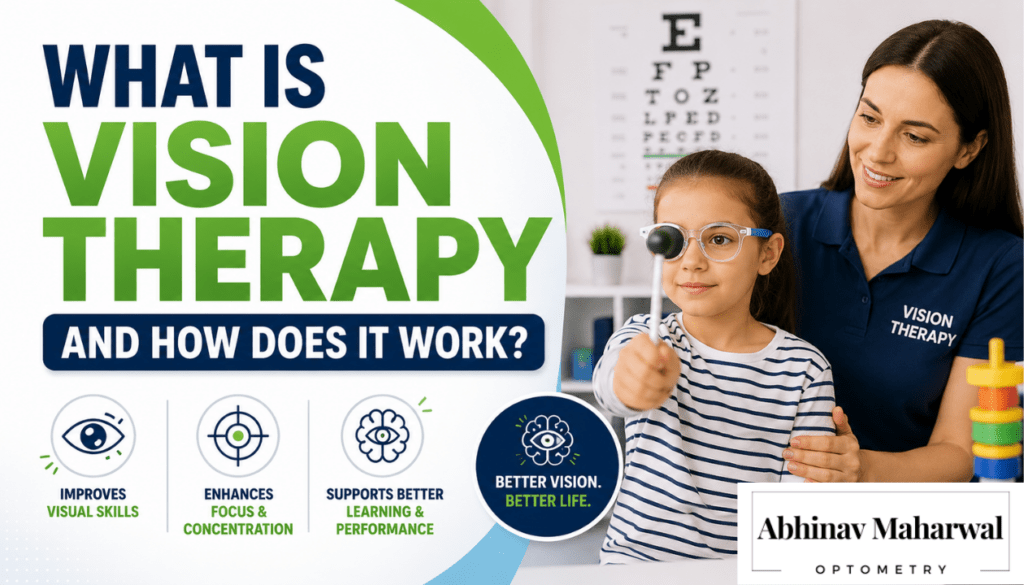
What Is Vision Therapy and How Does It Work?
In today’s digital lifestyle, vision related problems are becoming more common in both children and adults. Excessive screen time, academic stress, poor visual habits, and undiagnosed eye coordination issues can affect reading, concentration, learning ability, and daily performance. Many people believe clear eyesight means healthy vision, but vision also depends on how effectively the eyes and brain work together. Poor visual coordination may cause headaches, eye strain, blurred vision, double vision, and focusing difficulties. At Sight First Vision Therapy by Abhinav Maharwal, personalized Vision Therapy programs are designed to improve visual skills naturally and enhance overall visual comfort, performance, and quality of life. What Is Vision Therapy? Vision Therapy is a specialized, non-surgical treatment designed to improve coordination between the eyes and the brain. It helps strengthen important visual skills such as focusing, eye tracking, visual processing, depth perception, and eye coordination. Similar to physical therapy for the body, vision therapy trains the visual system to work more efficiently through personalized exercises, lenses, prisms, and computer-based exercises. It is generally recommended for conditions such as lazy eye, squint, convergence insufficiency, eye strain, double vision, and learning-related vision problems. How Does Vision Therapy Work? Vision therapy strengthens the connection between the eyes and the brain through structured exercises and individual vision sessions. The treatment improves basic visual skills necessary for comfortable reading, learning, concentration, and daily activities. Eye Teaming Vision Therapy helps both eyes work together accurately and comfortably. Improved eye coordination reduces symptoms like double vision, headaches, eye strain, and reading difficulties, helping patients achieve smoother and more efficient visual performance during daily tasks and near work activities. Eye Tracking Eye tracking skills enable smooth eye movements while reading or tracking moving objects. Vision therapy improves tracking control, visual attention and reading accuracy, helping children and adults maintain better focus without skipping words, losing focus or experiencing visual discomfort. Focusing Ability Throughout the day, your eyes constantly adjust their focus between near and far objects. Vision therapy increases flexibility of focus, improves visual clarity, and reduces eye fatigue caused by long periods of reading, digital screen exposure, studying, and continuous close-up visual activities. Visual Processing Visual processing refers to how the brain understands and interprets information received from the eyes. Vision therapy improves reading comprehension, memory, concentration, visual perception, and learning abilities, allowing patients to process visual information more accurately and efficiently in daily life. Hand-Eye Coordination Vision therapy improves visual perception and body movement coordination. Strengthened hand-eye coordination improves sports performance, writing skills, driving skills, balance, reaction time, and overall efficiency in daily activities that require precise hand-eye-body coordination. Benefits of Vision Therapy Vision therapy can significantly improve both visual comfort and daily performance. Many patients see noticeable changes in their ability to study, concentrate, perform in sports, and overall self-confidence. Some major benefits of Vision Therapy include: With proper diagnosis and personalized treatment, Vision Therapy can create long-term improvements in visual efficiency and quality of life. Who Can Benefit from Vision Therapy? Vision Therapy is beneficial for both children and adults experiencing visual and learning-related difficulties. Children struggling with reading, concentration, handwriting, lazy eye, squint, or poor visual attention can show significant improvement through personalized therapy programs. Many parents report improved academic performance, self-confidence, and concentration after treatment. Adults who suffer from headaches, digital eye strain, double vision, difficulty concentrating, or work related eye strain may also benefit from vision therapy. Athletes can improve reaction time, hand eye coordination, and sports performance through Sports Vision Training. At Abhinav Maharwal Vision Therapy Clinic Jaipur, therapy programs are customized according to each patient’s visual needs. Conclusion Vision therapy aims not only to improve vision, but also to improve the functioning of the visual system as a whole. Healthy vision plays an important role in learning, reading, concentration, sports performance, and daily activities. Children and adults can be affected differently if their visual abilities are not functioning properly. With the help of professional Vision Therapy, many visual problems can be treated effectively without surgery. Early diagnosis and proper treatment can significantly improve visual comfort, confidence, and overall quality of life. Book Your Vision Therapy Consultation If you or your child are experiencing headaches, eye strain, reading difficulties, lazy eye, squint, or concentration problems, professional Vision Therapy may help. Visit Abhinav Maharwal Vision Therapy Center to schedule a comprehensive vision assessment and learn more about personalized Vision Therapy programs. Reference: https://my.clevelandclinic.org/health/treatments/vision-therapy https://www.optometrists.org/vision-therapy/guide-to-vision-therapy/what-is-vision-therapy/ https://www.covd.org/page/vision_therapy FAQ’s
What Is Vision Therapy and How Does It Work? Read More »