Lazy Eye Treatment in Delhi: Why Assessment Matters Even After 12 Years of Age
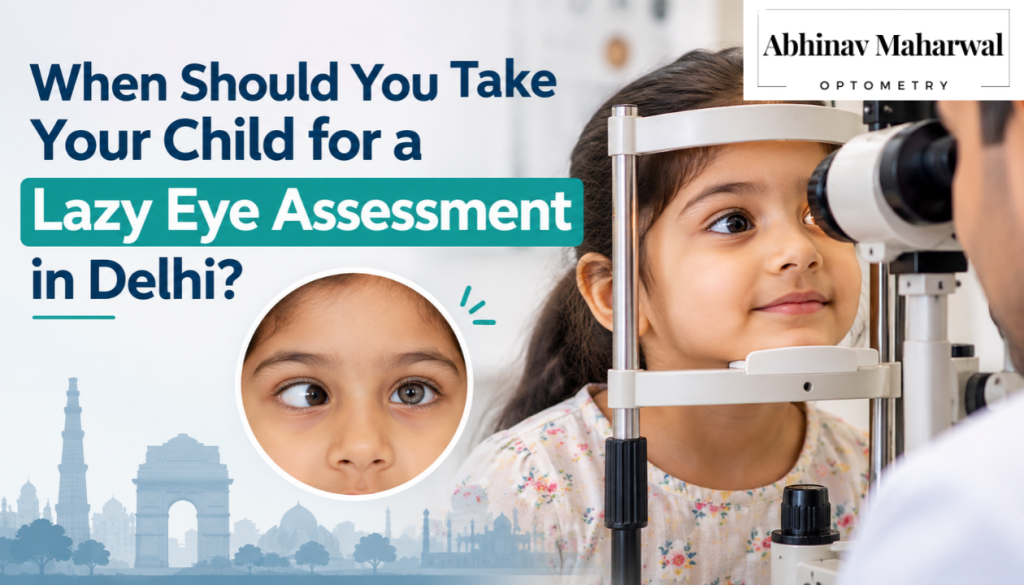
Lazy eye treatment in Delhi starts with a comprehensive assessment. Children, teenagers, and adults may explore suitable treatment options based on individual clinical findings. It is important for parents to ensure their child can see clearly, learn comfortably, and have a good experience with daily activities. During early childhood, it is possible to develop lazy eye (amblyopia) without identifying any clear symptoms. A child may rely more on the stronger eye without realizing that the other eye has reduced vision. Parents should watch for unusual visual behaviour and seek an eye assessment if they notice any concerns. At Sight First Vision Therapy by Dr. Abhinav Maharwal, children and adults can undergo an assessment to determine whether further evaluation or treatment for amblyopia is appropriate. What Is Lazy Eye (Amblyopia)? Amblyopia, commonly known as lazy eye, is a vision condition in which one eye does not develop normal visual clarity during childhood. It can occur when the brain and eyes do not develop a normal visual connection. Common causes include: Lazy eye can occur without a visible eye turn. Therefore, an appropriate eye examination is important even when symptoms are not obvious. Can Lazy Eye Be Treated After 12 Years of Age? One of the most common misconceptions about amblyopia is that treatment becomes impossible after 8 or 12 years of age. Although early diagnosis and treatment are important for visual development, older children, teenagers, and adults should not automatically assume that nothing can be done to improve their vision. At Sight First Vision Therapy by Dr. Abhinav Maharwal, we have worked with patients beyond 12 years of age, including adults, through hybrid and completely online Vision Therapy programmes. Our clinical experience has encouraged us to explore the potential of structured Vision Therapy for appropriately selected patients. The suitability of Vision Therapy depends on the patient’s diagnosis, visual acuity, refractive status, ocular health, and other relevant visual functions. Outcomes vary between individuals, and improvement cannot be guaranteed. Can Adults Benefit from Vision Therapy for Lazy Eye? Age alone should not be the only reason to dismiss concerns about amblyopia. Adults with reduced vision in one eye may benefit from a comprehensive assessment to identify the cause and determine whether treatment could be appropriate. Eligible patients can explore structured hybrid or online Vision Therapy programmes following an appropriate clinical evaluation. Progress should be monitored using objective measures of visual function, with referral to an ophthalmologist or another specialist whenever indicated. The important message is simple: Do not assume that you have missed every opportunity for treatment simply because you are older than 12. Seek an appropriate assessment to explore your options. Hybrid and Online Vision Therapy for Lazy Eye Access to specialised Vision Therapy can be challenging for patients who live far from a vision rehabilitation centre. At Sight First Vision Therapy by Dr. Abhinav Maharwal, hybrid and completely online Vision Therapy programmes are available for appropriately selected patients. These programmes provide structured visual training and professional guidance without requiring an in-clinic visit for every session. Following an initial assessment and confirmation of suitability, a programme may include: Online Vision Therapy is not suitable for every patient and does not replace examinations requiring an in-person assessment. The programme and monitoring schedule should be based on individual clinical needs. For patients who have lived with reduced vision since childhood, a comprehensive assessment can help establish whether the condition is amblyopia or another eye problem and identify appropriate management options. When Should You Seek a Lazy Eye Assessment? Consider arranging an eye assessment if you notice any of the following signs. 1. When One Eye Turns Inward or Outward An eye that frequently turns inward, outward, upward, or downward may indicate a squint. Eye misalignment can interfere with visual development and increase the risk of amblyopia. 2. When Your Child Frequently Closes One Eye Repeatedly closing one eye while reading, watching television, or looking at distant objects may indicate a visual difficulty that requires evaluation. 3. When Your Child Holds Books or Screens Very Close Holding books or screens close to the face, squinting, or struggling to see distant objects may indicate a refractive error or another visual concern. 4. When Your Child Struggles With Reading or Schoolwork Difficulty maintaining reading position, losing place while reading, or experiencing persistent visual discomfort may warrant an eye examination. 5. When There Is a Family History of Eye Problems Inform the eye-care professional about any family history of amblyopia, squint, significant refractive errors, or childhood eye conditions. 6. When Your Child Has Never Had an Appropriate Eye Examination A child may appear to see normally because the stronger eye compensates for reduced vision in the weaker eye. Age-appropriate vision screening and professional examinations can help identify concerns. At What Age Should Children Have a Lazy Eye Assessment? Amblyopia can develop early in childhood, so parents should not wait until their child starts school if they notice possible vision problems. An eye-care professional can recommend the appropriate examination and follow-up schedule. What Happens During a Lazy Eye Assessment? The assessment depends on the patient’s age, symptoms, medical history, and clinical needs. 1. Visual Acuity Testing The professional checks how clearly each eye sees using age-appropriate letters, pictures, symbols, or other methods. 2. Refraction and Glasses Prescription Testing helps identify refractive errors such as nearsightedness, farsightedness, and astigmatism. Correcting these errors is often an important part of amblyopia management. 3. Eye Alignment and Movement Assessment The professional evaluates whether the eyes point in the same direction and move appropriately. 4. Binocular Vision Assessment Where appropriate, tests may evaluate how the eyes work together and assess binocular coordination. 5. Personalised Recommendations Based on the findings, management may include glasses, patching, treatment of an underlying eye condition, specialist referral, or other appropriate approaches. Vision Therapy may be considered for selected visual difficulties when clinically appropriate. Conclusion Lazy eye can affect visual development even when symptoms are not obvious. Early assessment is important, but older children, teenagers, and adults should not
Lazy Eye Treatment in Delhi: Why Assessment Matters Even After 12 Years of Age Read More »