
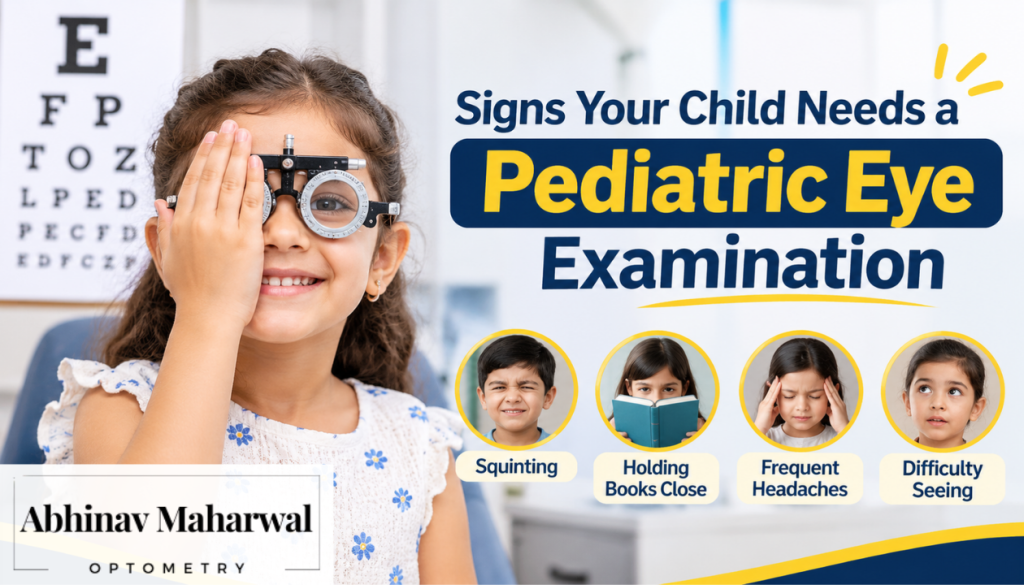
A pediatric eye examination helps identify vision problems early, including squint, lazy eye, and refractive errors, supporting healthy visual development in children.
Children use their vision for various activities, such as reading, writing, playing, learning, and more. The difficulty of identifying vision problems in children is due to their lack of awareness. They might think their vision is fine, even if they struggle with focus, reading, or seeing distant things clearly.
A pediatric eye examination helps identify vision problems that may affect a child’s visual development and daily activities. Visiting a Pediatric Optometrist can help parents identify concerns early and explore suitable eye care options.
If you notice unusual visual behaviour in your child, consider consulting a Pediatric Optometrist in Delhi for an appropriate assessment.
Why Is a Pediatric Eye Examination Important?
Children’s vision develops as they grow. Problems such as refractive errors, squint, and amblyopia (lazy eye) may affect how they see and use their eyes.
A child may not always complain about blurred vision. Sometimes, parents first notice signs such as sitting close to the television, closing one eye while reading, or struggling with schoolwork.
A full eye checkup can help evaluate how well you see, whether your eyes are aligned properly, your ability to focus, and other important visual functions. Early detection helps an eye care expert suggest the right care plan that works best for the child’s specific needs.
8 Signs Your Child Needs a Pediatric Eye Examination
1. Frequent Squinting or Closing One Eye

If your child frequently squints while looking at distant objects or closes one eye while reading, watching television, or playing, it may indicate a visual difficulty.
These behaviors can sometimes be linked to refractive errors or eye alignment issues. The occurrence of sporadic squinting is not always indicative of an eye condition, but repeated behavior should not be overlooked.
A pediatric eye examination can help identify the possible cause and determine whether further care is needed.
2. Holding Books or Screens Too Close
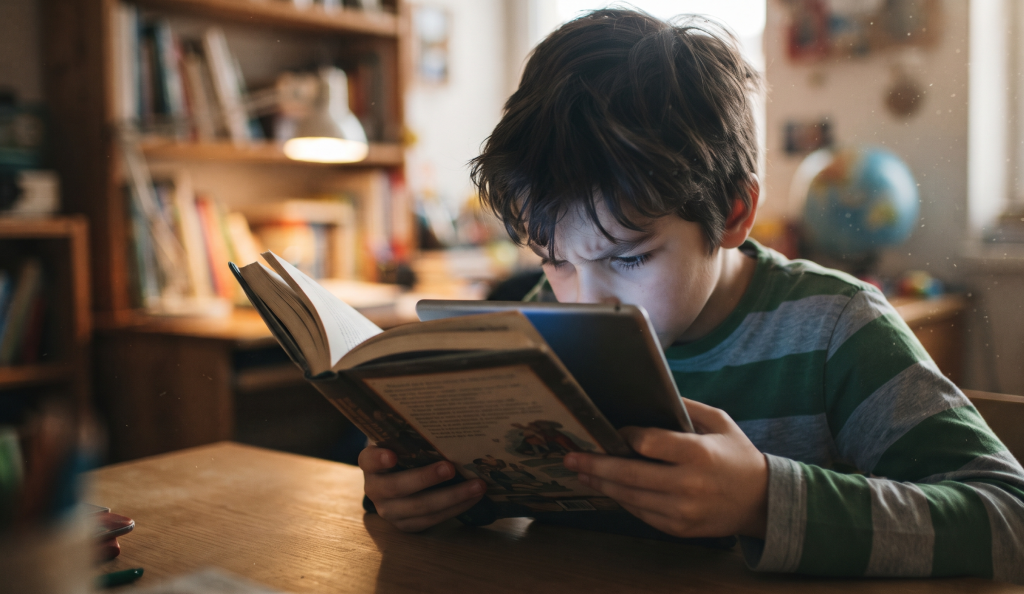
Children sometimes hold books, mobile phones, or tablets close to their faces. While this behaviour does not automatically mean that a child has a vision problem, it may be worth checking if it happens frequently.
Other signs may include sitting very close to the television, moving closer to see objects, or having difficulty recognising people or objects from a distance.
A Pediatric Optometrist can assess the child’s vision and check for refractive errors that may require correction.
3. Difficulty Reading or Completing Schoolwork
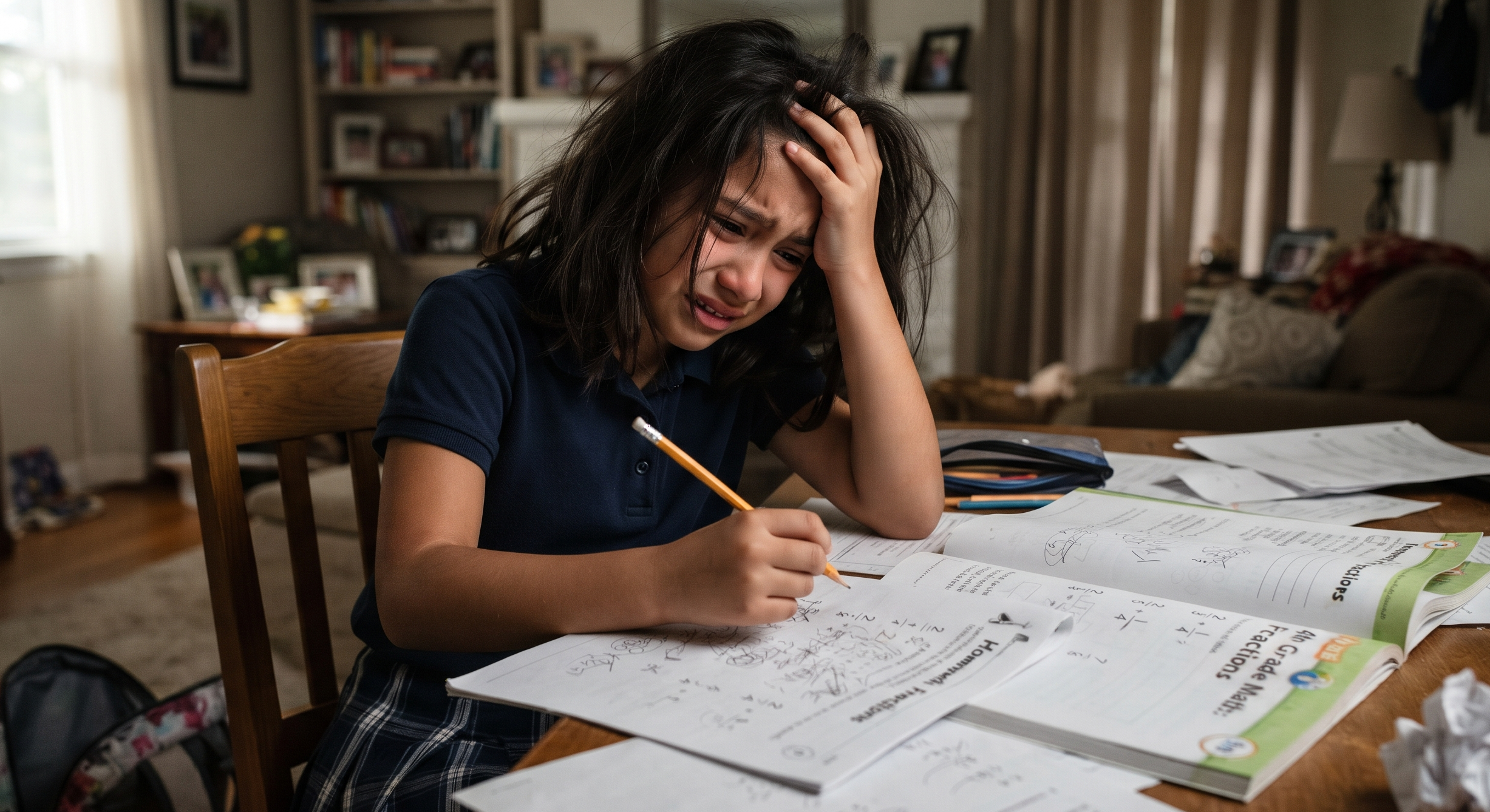
Vision plays an important role in reading, writing, copying from a board, and completing classroom activities.
Some children may lose their place while reading, skip lines, experience visual discomfort, or struggle to maintain focus on a page. These symptoms can have several causes and do not necessarily indicate an eye problem.
If your child regularly experiences these difficulties, an eye examination can help determine whether a vision issue may be contributing to them.
4. Frequent Headaches or Eye Strain

Some children complain of headaches, tired eyes, or discomfort after reading, writing, or using digital screens for extended periods.
These symptoms may sometimes be linked to refractive errors or focusing issues. However, headaches and eye discomfort might also come from different reasons.
If the symptoms keep happening, it’s best to talk to a healthcare professional who can help. An eye exam can help determine if there is a vision issue involved.
5. One Eye Turns Inward or Outward

An eye that turns inward, outward, upward, or downward may indicate strabismus, commonly known as squint.
Some eye alignment problems are noticeable all the time, while others appear only occasionally. Squint can affect how both eyes work together and may be associated with amblyopia (lazy eye).
If you notice an unusual eye turn, arrange an assessment rather than waiting for your child to outgrow it.
6. Poor Hand-Eye Coordination
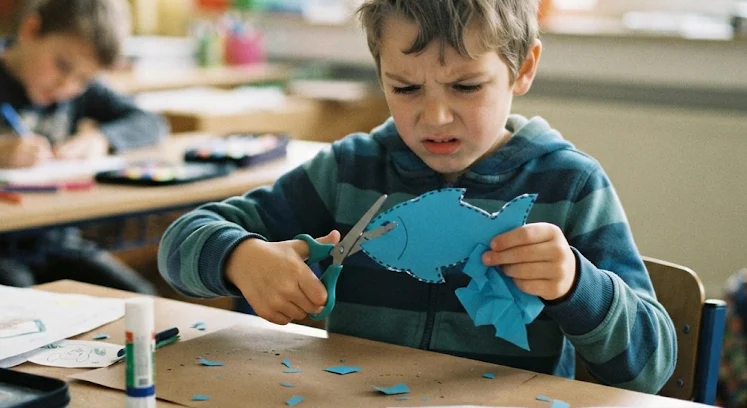
Children use their vision to catch a ball, climb stairs, draw, write, and coordinate movements during play.
If your child frequently experiences difficulties with visual acuity during activities that require attention, an eye examination may provide valuable information. However, coordination issues might also come from other developmental or medical reasons.
A professional assessment can help determine whether further evaluation is appropriate.
7. Difficulty Seeing the Classroom Board
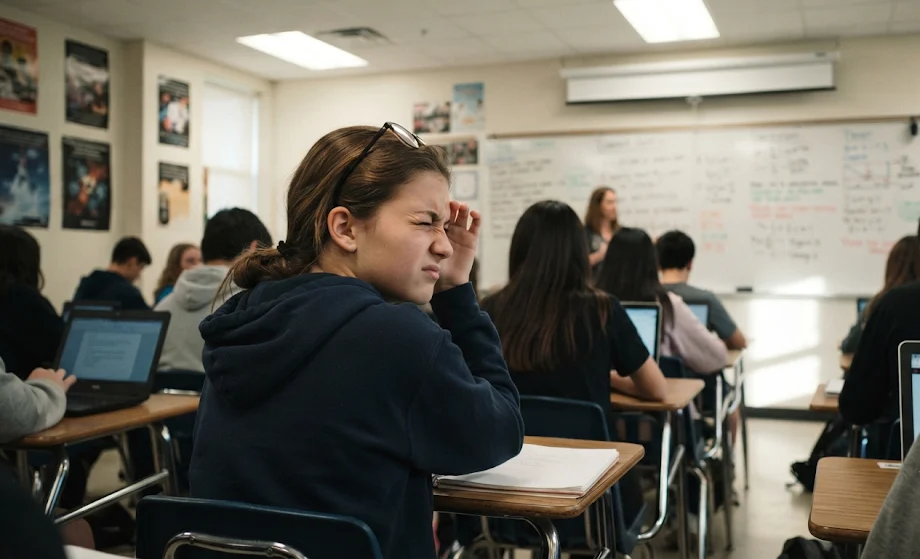
If your child frequently moves closer to the board, copies information incorrectly, or complains that distant objects look blurry, they may have difficulty seeing clearly at a distance.
Refractive errors, such as myopia (nearsightedness), can affect classroom activities and everyday tasks.
A pediatric eye examination can help identify these problems and determine whether glasses or other management options may be needed.
8. A Family History of Eye Problems
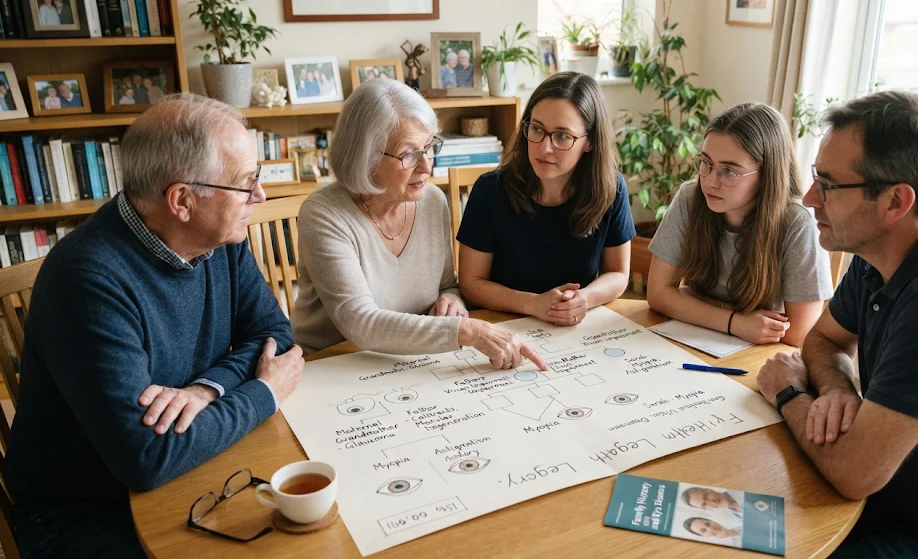
Some children may have a higher risk of certain eye conditions because of their family history.
If parents or siblings have a history of amblyopia, squint, significant refractive errors, or other childhood eye conditions, share this information with your child’s eye care professional.
Even if your child doesn’t seem to have any clear signs, a professional can tell you if a checkup or more observation is needed.
When Should You Take Your Child for an Eye Examination?
Parents should not wait until a child complains of blurred vision before arranging an eye examination. Some vision problems can develop without obvious symptoms.
Consider an assessment if your child:
- Shows any of the signs mentioned above.
- Has difficulty seeing clearly at near or far distances.
- Has a known eye condition or relevant family history.
- Has concerns identified during a school vision screening.
- Experiences persistent visual discomfort during reading or other activities.
The timing and frequency of examinations depend on the child’s age, risk factors, symptoms, and previous findings. Sudden vision loss, sudden double vision, or a sudden new eye turn requires prompt medical assessment.
What Happens During a Pediatric Eye Examination?
A pediatric eye examination is tailored to the child’s age, symptoms, and ability to participate in testing.
Depending on the clinical need, it may include:
- Visual acuity testing: Checks how clearly each eye can see.
- Refraction assessment: Identifies refractive errors and whether glasses may be needed.
- Eye alignment assessment: Checks whether the eyes point in the same direction.
- Focusing and eye movement tests: Evaluates relevant visual functions.
- Binocular vision assessment: Checks how the eyes work together when appropriate.
- Eye health evaluation: Helps identify concerns that may require further examination or referral.
Based on the findings, the professional can recommend appropriate next steps, which may include glasses, monitoring, further evaluation, or referral to an ophthalmologist.
How Can a Pediatric Optometrist Help Your Child?
A Pediatric Optometrist focuses on assessing children’s vision and identifying visual difficulties that may affect learning, reading, and everyday activities.
At Sight First Vision Therapy by Dr. Abhinav Maharwal, children can be assessed for relevant visual concerns, including refractive errors, eye coordination difficulties, binocular vision problems, and signs that may require further evaluation.
The best method to follow is based on the child’s medical test results. Some kids might need glasses, and others might need more tests or a visit to an eye doctor.
If you need a pediatric optometrist in Delhi, scheduling a proper eye checkup can help you move forward with addressing your child’s vision requirements.
Conclusion
Children sometimes fail to notice or explain their vision issues clearly. Frequent squinting, holding books too close, headaches, reading difficulties, and unusual eye alignment can signal the need for an eye exam.
Sight First Vision Therapy by Dr. Abhinav Maharwal offers specialised services, including Amblyopia / Lazy Eye Treatment, Squint Treatment, Vision Therapy, Headaches and Learning Disorders, Convergence Insufficiency, Cortical Visual Impairment (CVI), and Autism-related vision support. The clinic also provides Comprehensive Eye Examination, Sports Vision services, and other specialised vision care based on individual clinical needs.
Early evaluation can help spot any vision issues and lead to the right kind of care. If you’re seeking a Pediatric Optometrist in Delhi, contact Sight First Vision Therapy by Dr. Abhinav Maharwal to discuss your child’s vision concerns and explore suitable assessment and treatment options.
Book an Eye Assessment Today: Contact Sight First Vision Therapy by Dr. Abhinav Maharwal to schedule an appointment and take the next step towards your child’s visual health.
FAQ’s
Frequent squinting, closing one eye, holding books too close, headaches during reading, and difficulty seeing the classroom board may indicate a need for an eye examination.
The appropriate timing depends on the child’s development, symptoms, and risk factors. Seek professional advice if you notice any unusual visual behaviour.
Yes. Some children may not realise that their vision is reduced, particularly when one eye sees better than the other.
Yes. Certain vision problems may make reading, writing, and seeing the classroom board more difficult. However, learning difficulties can have several causes.
Not always. However, if your child repeatedly holds books or screens very close, an eye examination can help identify possible visual concerns.
A pediatric optometrist assesses children’s vision and relevant visual functions. An ophthalmologist is a medical doctor who diagnoses and treats eye diseases and can perform eye surgery.
An assessment may identify signs of amblyopia (lazy eye). Further examination may be needed to confirm the diagnosis and determine appropriate treatment.
The frequency depends on age, risk factors, symptoms, and previous examination results. Follow the recommendations of your child’s eye care professional.
You can contact Sight First Vision Therapy by Dr. Abhinav Maharwal in Lajpat Nagar, New Delhi, to enquire about an appropriate vision assessment.
Seek prompt medical assessment for sudden vision loss, sudden double vision, a sudden new eye turn, or other sudden and significant changes in vision.