
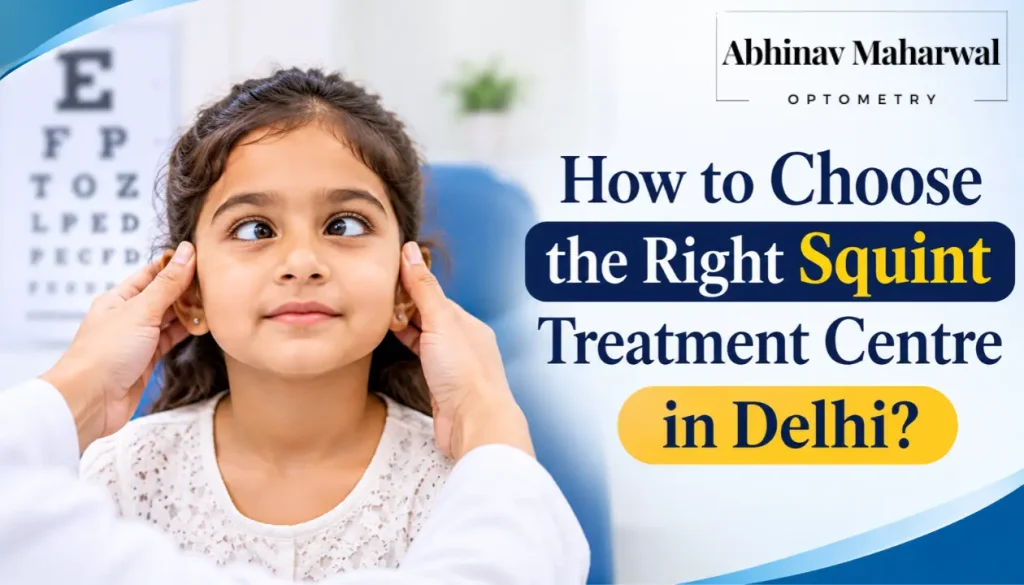
A suitable squint treatment centre offers expert assessment, personalised care, appropriate treatment options, and regular follow-ups for children and adults
Picking the right place for squint treatment is a big choice when you or your child has issues with how the eyes align. Squint, which is also called strabismus, is when both eyes don’t point in the same direction at the same time. It could impact how the eyes work together, the ability to use both eyes at the same time, and in some cases, the way vision develops.
Finding the right centre involves more than checking its location. Parents and patients should consider the experience of eye care professionals, assessment facilities, available treatment options, and follow-up support.
If you are searching for Squint Eye Treatment in Delhi, choosing a centre that provides appropriate assessment and individualised care can help you explore suitable management options.
10 Key Factors for Choosing a Squint Treatment Centre
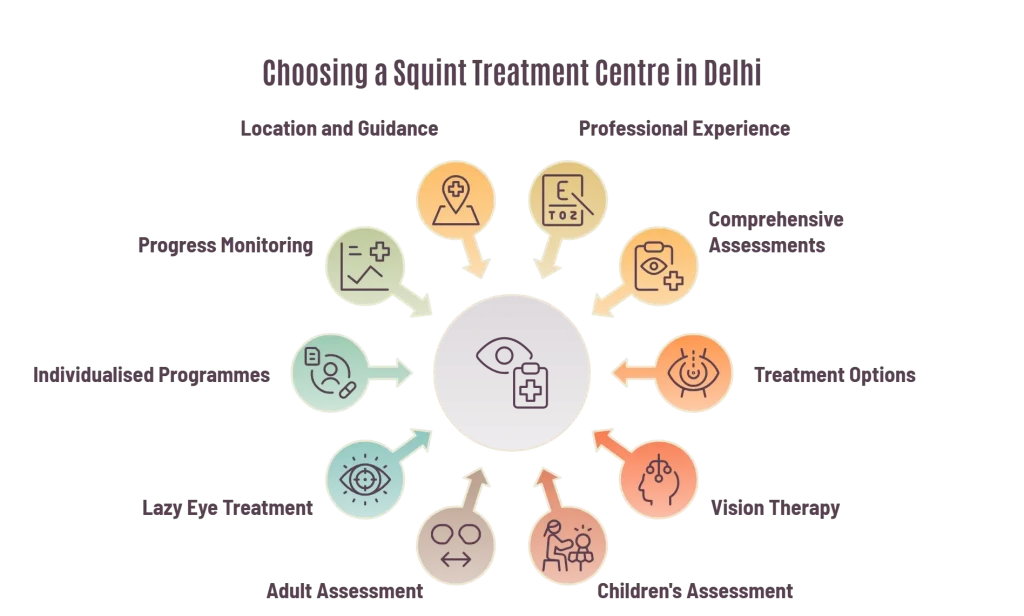
1. Check the Experience of Eye Care Professionals
The experience and qualifications of the professionals involved in squint assessment are important factors. Pick a place where trained eye care experts can check your eye alignment, how well you see, and other important eye functions.
You should also check whether the centre has experience assessing children and adults with different types of squint.
2. Look for Comprehensive Eye Assessments
A good evaluation is a key step before choosing any treatment for a squint. The center should look at each patient’s unique vision needs instead of suggesting the same solution for everyone.
Depending on the clinical requirements, an assessment may include:
- Visual acuity testing.
- Eye alignment assessment.
- Eye movement evaluation.
- Refraction testing.
- Binocular vision assessment.
- Focusing ability evaluation.
These tests help identify relevant visual concerns and guide further management.
3. Explore the Available Squint Treatment Options
Squint management depends on its type, cause, severity, and the patient’s age. Different patients may require different approaches.
Depending on the diagnosis, available options may include:
- Prescription glasses for relevant refractive errors.
- Amblyopia management when lazy eye is present.
- Vision Therapy for selected visual difficulties.
- Prisms in appropriate cases.
- Referral for ophthalmological evaluation or surgical treatment when indicated.
A reliable centre should explain the available options and their suitability instead of promising one treatment for everyone.
4. Check Whether the Centre Provides Vision Therapy
Vision therapy might be an option for certain patients who have trouble with how their eyes work together and coordinating both eyes.
A planned program might have guided visual tasks, exercises, and ways to track progress, all based on the results of a personal assessment.
If you are exploring Squint Treatment in Delhi, ask whether the centre evaluates visual functions and determines when Vision Therapy may be appropriate.
It is important to remember that Vision Therapy is not a replacement for squint surgery or other medical treatment when these are clinically indicated.
5. Look for Experience in Children’s Squint Assessment
Squint can develop during childhood and may sometimes be associated with amblyopia (lazy eye).
Children might not always know or tell others about their trouble seeing clearly. Parents should choose a centre that can check a child’s vision using methods that are suitable for their age.
Early assessment can help identify eye alignment problems and determine whether further treatment or specialist referral is needed.
6. Check Whether Adult Squint Patients Are Also Assessed
Squint is not limited to children. Adults can also have issues with how their eyes line up, and some of these problems might show up later in life.
A good center should be able to check adults who have problems like seeing with both eyes at the same time, eyes not lining up properly, or having trouble using both eyes together.
Age alone should not be the reason to avoid an assessment. The appropriate management depends on the underlying cause and clinical findings.
7. Check the Centre’s Approach to Lazy Eye Treatment
Squint and amblyopia can sometimes occur together, but they are not the same condition.
Amblyopia, commonly known as lazy eye, involves reduced vision in one eye due to abnormal visual development. Some patients with squint may also require an assessment for amblyopia.
Choose a centre that can evaluate both eye alignment and visual acuity and recommend appropriate care or referral when necessary.
8. Ask About Individualised Treatment Programmes
Every patient has different visual requirements. The way treatment is planned should depend on the results of the assessment, the person’s medical background, their age, and any other important factors.
Check if the centre offers personalized plans and find out what each suggested activity or treatment is meant to do.
A clear treatment plan helps patients and parents know the next steps and the importance of regular follow-ups.
9. Check Progress Monitoring and Follow-Up Support
Squint management might need ongoing checks to track changes in how well someone sees and how well the treatment is working.
Before you choose a centre, make sure to ask about follow-up meetings, how they check on your progress, and how you’ll stay in touch with the doctor or specialist taking care of you.
Progress should be checked using real clinical tests instead of just thinking that things are getting better.
10. Consider Location, Accessibility and Patient Guidance
Travelling regularly for eye assessments and follow-up appointments can be challenging, particularly for children and families living in different parts of Delhi.
Think about where the centre is located, whether there are available times to book an appointment, how easy it is for people to get there, and the help given to patients.
You can also ask if patients who are suitable have access to hybrid or online Vision Therapy programs when it is clinically right.
Why Choose Sight First Vision Therapy for Squint Assessment in Delhi?
Sight First Vision Therapy by Dr. Abhinav Maharwal specializes in the evaluation of visual capabilities and the delivery of personalized vision care, meticulously tailored to the specific clinical requirements of each patient.
The center provides treatment for squint, including evaluation and advice on managing certain eye alignment issues, and also offers treatment for amblyopia, or lazy eye, for patients who have poor vision due to this condition.
Vision therapy is a special kind of eye training that’s given to patients who need it, and a binocular vision assessment is a test that checks how well both eyes work together. The centre also offers assessments for Convergence Insufficiency and other visual issues that might be connected to certain headaches and learning disorders.
Based on the specific medical findings for each person, appropriate care or treatment choices are talked about. Patients might also be sent to an ophthalmologist or another specialist if needed.
Conclusion
Choosing the right squint treatment centre involves checking professional qualifications, assessment facilities, available treatment options, individualised care, and follow-up support. A good assessment can help find out what kind of squint someone has and figure out the best ways to treat it.
Sight First Vision Therapy by Dr. Abhinav Maharwal provides specialised services, including Squint Treatment, Amblyopia / Lazy Eye Treatment, Vision Therapy, and Binocular Vision Assessment.
If you are looking for Squint Eye Treatment in Delhi, contact Sight First Vision Therapy to discuss your concerns and arrange an appropriate assessment.
Book Your Squint Eye Assessment Today! Connect with Sight First Vision Therapy by Dr. Abhinav Maharwal to explore suitable assessment and treatment options for your visual needs.
FAQ’s
Look for qualified eye care professionals, comprehensive eye assessments, suitable treatment options, individualised care plans, and regular follow-up support.
Check professional qualifications, experience in assessing squint, available diagnostic facilities, treatment approaches, and referral arrangements.
Some patients may benefit from glasses, Vision Therapy for selected visual difficulties, or other non-surgical approaches. However, surgery may be necessary in certain cases.
Vision Therapy may help selected patients with binocular vision and eye coordination difficulties. Its suitability depends on the diagnosis and clinical assessment.
Yes. Children can undergo an age-appropriate squint assessment to identify eye alignment problems and explore suitable management options.
Yes. Adults can undergo an assessment to identify the cause of eye misalignment and determine appropriate treatment options.
Depending on individual needs, testing may include visual acuity, refraction, eye alignment, eye movement, and binocular vision assessments.
Squint involves misalignment of the eyes, whereas lazy eye (amblyopia) involves reduced vision in one eye due to abnormal visual development. Both conditions can sometimes occur together.
Treatment duration depends on the type of squint, its cause, severity, selected treatment approach, and individual response. Your eye care professional can explain the expected follow-up schedule.
You can contact Sight First Vision Therapy by Dr. Abhinav Maharwal in Lajpat Nagar, New Delhi, to enquire about squint assessment, Vision Therapy, and suitable management options.