
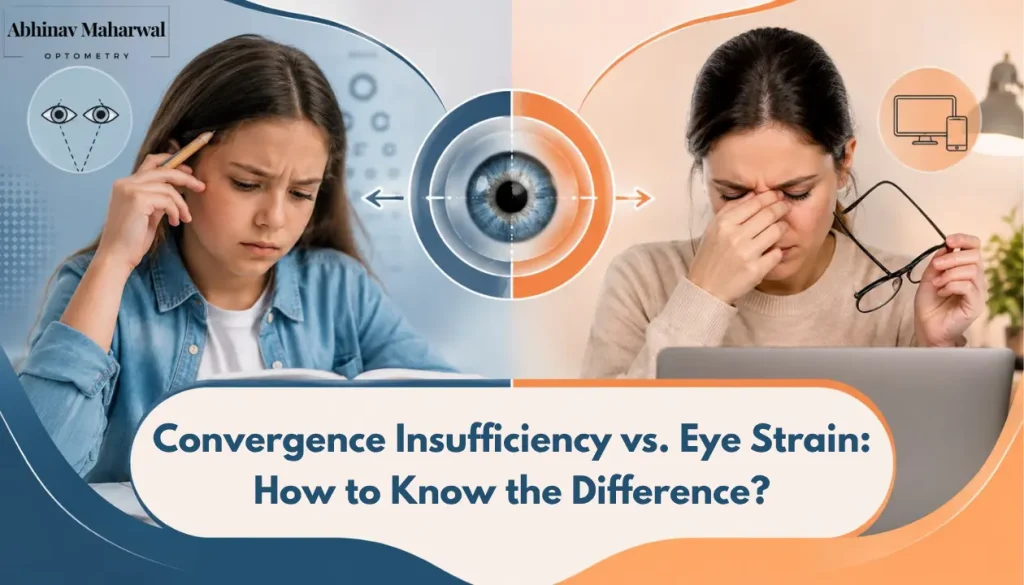
Convergence Insufficiency and Eye Strain can have similar symptoms, but they are different. Convergence Insufficiency affects eye coordination during near tasks, while eye strain is general visual fatigue. A binocular vision assessment can help identify the underlying problem and guide appropriate treatment.
Convergence Insufficiency vs. Eye Strain can sometimes be difficult to differentiate because both conditions may cause eye discomfort, headaches, blurred vision, and difficulty during prolonged near work. However, they are not the same.
Convergence insufficiency is a binocular vision problem in which the eyes have difficulty working together while focusing on nearby objects, whereas eye strain is a broader term used to describe visual discomfort or tiredness.
It’s important to know the difference, especially for kids and adults who feel symptoms while reading, studying, using a computer, or working on a phone. A full check of eye teaming can help find out if convergence insufficiency or another eye issue might be causing these problems.
What is Convergence Insufficiency?
Convergence Insufficiency is a problem with how the eyes work together.When looking at things that are close, the eyes struggle to turn inward and keep working properly as a team. Usually, both eyes should work together smoothly when reading, writing, using a smartphone, or doing other tasks that require looking up close.
When convergence is insufficient, a person may experience difficulty maintaining comfortable binocular vision during near tasks. Symptoms can become more noticeable during prolonged reading or other activities that require sustained near focus.
At Dr. Abhinav Maharwal Vision Therapy Clinic in Delhi and Jaipur, a comprehensive binocular vision assessment can evaluate convergence, eye coordination, focusing ability, and other visual skills to understand the individual’s specific needs.
What is Eye Strain?
Eye strain, also called visual fatigue, is when your eyes feel uncomfortable or tired after doing a lot of visual work for a long time. Reading for a long time, using screens too much, not having enough light, not fixing vision issues, or focusing for too long can all lead to eye strain.
Common symptoms might be feeling tired eyes, getting headaches, having blurry vision, trouble focusing, dry or itchy eyes, and feeling uncomfortable after doing a lot of reading or looking at screens for a long time.
Eye strain itself does not necessarily mean that a person has convergence insufficiency. However, convergence insufficiency can be one of the visual factors contributing to discomfort during near work.
Convergence Insufficiency vs. Eye Strain: 10 Key Differences
| Convergence Insufficiency | Eye Strain |
| 1. Underlying Cause: It is primarily a binocular vision problem involving difficulty coordinating both eyes during near tasks. | 1. Underlying Cause: It is a general feeling of visual fatigue that can have several causes, including prolonged screen use or near work. |
| 2. Eye Teaming: The eyes may have difficulty turning inward and working together effectively when viewing nearby objects. | 2. Eye Teaming: Eye strain does not necessarily involve a problem with how both eyes work together. |
| 3. Reading Difficulties: It may cause losing place while reading, rereading lines, or difficulty maintaining visual attention. | 3. Reading Difficulties: Reading may become uncomfortable because of prolonged visual effort, but specific eye-teaming problems may not be present. |
| 4. Double Vision: Some people with convergence insufficiency may experience double vision, particularly during near work. | 4. Double Vision: Double vision is not a typical feature of ordinary eye strain and may require further evaluation if persistent. |
| 5. Words Appearing to Move: Text may sometimes appear to move, jump, or become difficult to maintain while reading. | 5. General Visual Fatigue: Eye strain is more commonly experienced as tired, heavy, burning, or uncomfortable eyes after prolonged visual activity. |
| 6. Near Point of Convergence: Convergence ability can be specifically assessed through binocular vision testing. | 6. No Specific Convergence Test: General eye strain does not have one specific diagnostic test because it can result from multiple factors. |
| 7. Headaches: Headaches may occur particularly during reading or other activities requiring sustained near vision. | 7. Headaches: Eye strain can also cause headaches, especially after prolonged screen use, reading, or visually demanding work. |
| 8. Treatment Approach: Selected patients may benefit from Vision Therapy designed to improve convergence, eye teaming, and related binocular vision skills. | 8. Management: Management may involve taking regular visual breaks, optimizing lighting and screen setup, correcting refractive errors, or addressing the underlying cause. |
| 9. Long-Term Pattern: Symptoms may repeatedly appear during near tasks even when the person gets adequate rest. | 9. Activity-Related: Eye strain often improves after reducing visual demands, taking breaks, or resting the eyes. |
| 10. Professional Assessment: A comprehensive binocular vision assessment may be required to identify convergence insufficiency. | 10. Comprehensive Eye Examination: Persistent eye strain should be evaluated to identify possible refractive, binocular, ocular, or other contributing factors. |
Key Takeaway
Although Convergence Insufficiency and Eye Strain can have similar symptoms, they are not the same condition. Convergence insufficiency specifically involves difficulties with binocular vision and eye coordination, while eye strain is a broader description of visual discomfort.
If symptoms repeatedly occur during reading, computer work, or other near activities, a comprehensive visual assessment can help identify the underlying cause.
Can Convergence Insufficiency Cause Eye Strain?
Yes, Convergence Insufficiency can lead to eye strain or make vision uncomfortable, especially when doing tasks that require focusing up close for a long time. When the eyes don’t work together well, keeping a clear and comfortable view with both eyes can take more effort.
This can result in symptoms such as headaches, tired eyes, blurred or double vision, or difficulty concentrating while reading.
However, not every case of eye strain is caused by convergence insufficiency. A comprehensive assessment is important to determine the underlying cause.
How is Convergence Insufficiency Diagnosed?
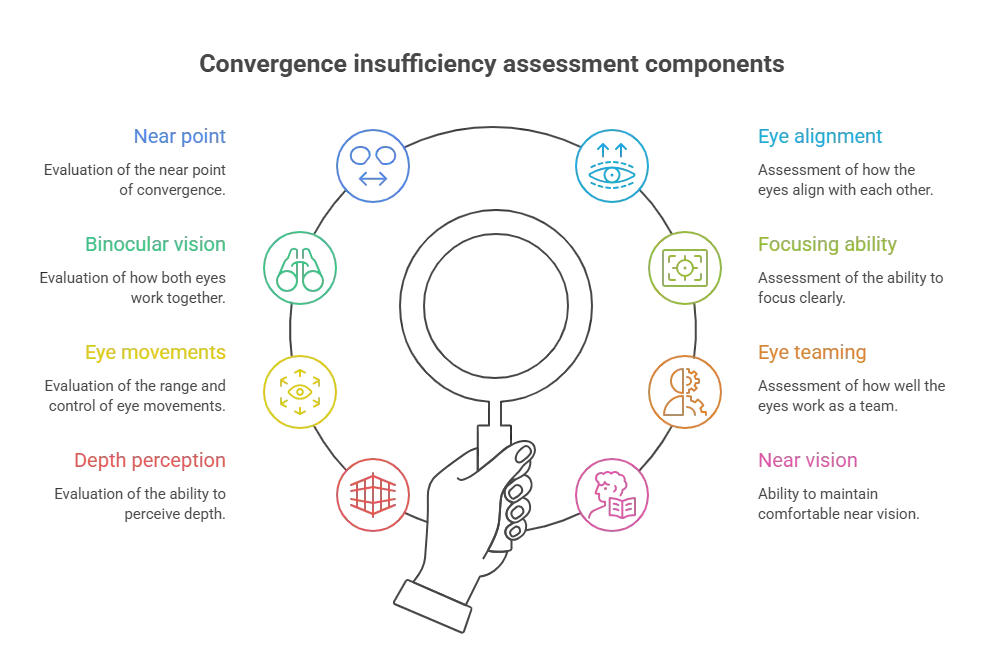
A routine eye examination that checks only visual acuity may not fully identify convergence insufficiency. A detailed binocular vision assessment may be required.
Depending on the individual, an assessment may evaluate:
- Near point of convergence
- Eye alignment
- Binocular vision
- Focusing ability
- Eye movements
- Eye teaming
- Depth perception
- Ability to maintain comfortable near vision
At Team Abhinav Maharwal, the assessment helps identify specific visual skill difficulties and determine whether Vision Therapy may be appropriate.
When Should You Consider Vision Therapy?
If symptoms repeatedly occur during reading, studying, computer work, or other near activities, it may be useful to have a comprehensive visual assessment.
Vision therapy in India might be considered for people who have certain visual skill problems found through a proper evaluation. For patients in Delhi, personalized Vision Therapy in Delhi can be considered depending on their specific visual requirements.
For patients who can’t go to a clinic often, some programs might also be offered through Vision Therapy Online, based on their specific condition and what they need in treatment.
When Eye Strain Needs Further Evaluation
Occasional eye fatigue after prolonged screen use may be common. However, frequent or persistent symptoms should not simply be ignored.
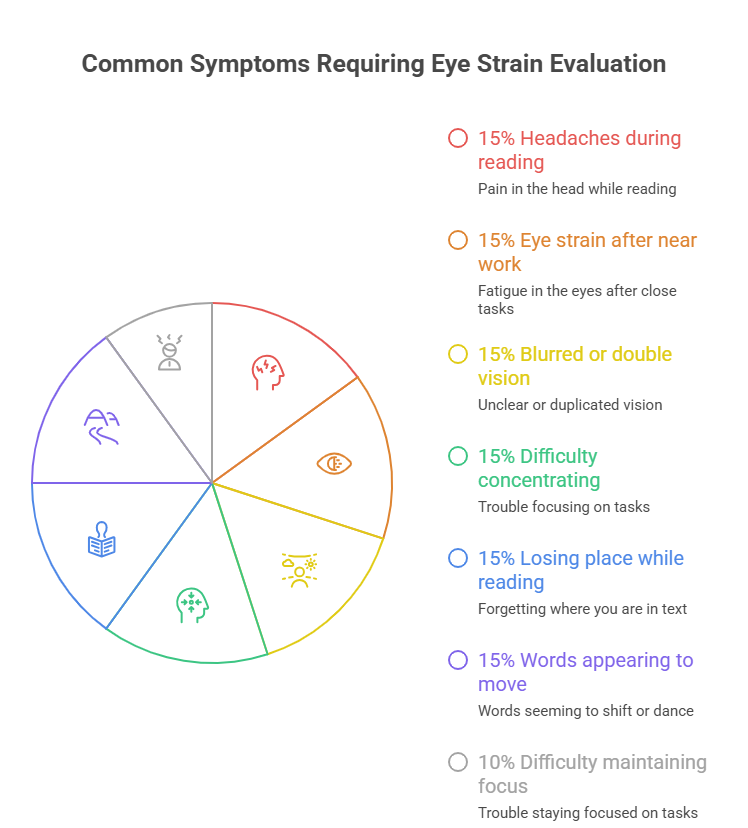
Consider a professional visual assessment if you regularly experience:
- Headaches during reading
- Eye strain after near work
- Blurred or double vision
- Difficulty concentrating
- Losing your place while reading
- Words appearing to move
- Difficulty maintaining focus
- Repeated discomfort during computer work
These symptoms can have multiple causes, so proper evaluation is important before deciding on treatment.
Conclusion
Convergence Insufficiency and Eye Strain may share symptoms such as headaches, blurred vision, tired eyes, and difficulty during prolonged near work, but the underlying causes can be different. A comprehensive visual and binocular vision assessment can help identify the specific visual skills that may be contributing to your symptoms.
At Dr. Abhinav Maharwal Vision Therapy Clinic in Delhi and Jaipur, we offer personalized Vision Therapy, Amblyopia/Lazy Eye Treatment, Squint Treatment, CVI Support, Autism-related Visual Therapy, Headache-related Vision Assessment, Learning Disorders-related Visual Assessment, Sports Vision, Convergence Insufficiency Treatment, Myopia Management, Low Vision Rehabilitation, Keratoconus Management, Scleral Contact Lenses, Prism Glasses, Orthokeratology (Ortho-K), and Comprehensive Eye Examination.
Sight First Vision Therapy in Delhi and Jaipur provides customized vision care based on individual needs.
Book a consultation today to explore the right treatment and improve your visual performance and comfort.
Reference:
https://www.ncbi.nlm.nih.gov/books/NBK554390
FAQ’s
Convergence insufficiency is a binocular vision problem in which the eyes have difficulty working together during near tasks. Eye strain is a broader term describing tiredness, discomfort, or fatigue that can occur after prolonged visual activities.
Yes. Difficulty coordinating the eyes during reading, studying, or computer work can contribute to visual discomfort, tired eyes, headaches, and difficulty maintaining focus.
Symptoms may include headaches during near work, blurred or double vision, losing your place while reading, difficulty concentrating, eye strain, and discomfort after prolonged reading or computer use.
Yes. Prolonged reading, screen use, focusing, or other visually demanding activities may contribute to headaches. However, recurring headaches can have many causes and should be evaluated appropriately.
A comprehensive binocular vision assessment can evaluate convergence, eye coordination, focusing ability, eye movements, binocular vision, and other relevant visual skills.
For appropriate patients, Vision Therapy may help improve specific visual skills such as convergence, eye teaming, focusing, and binocular coordination. Treatment should be customized according to the assessment findings.
Yes. Children may experience difficulty with reading, concentrating, copying from the board, or maintaining comfortable near vision. They may not always recognize or explain their visual symptoms clearly.
A visual assessment may be useful when eye strain occurs frequently, especially during reading, studying, computer use, or other near activities, or when it is accompanied by headaches, blurred vision, or double vision.
Yes. Sight First Vision Therapy in Delhi and Jaipur provides personalized vision assessment and therapy programs for appropriate visual conditions, including convergence insufficiency and other eye coordination problems.
Depending on individual needs, services include Amblyopia/Lazy Eye Treatment, Squint Treatment, CVI Support, Autism-related Visual Therapy, Learning Disorders-related Visual Assessment, Sports Vision, Convergence Insufficiency Treatment, Myopia Management, Low Vision Rehabilitation, Keratoconus Management, Scleral Contact Lenses, Prism Glasses for Diplopia/Double Vision, Orthokeratology (Ortho-K), and Comprehensive Eye Examination.